How to Build a House in Ocala, FL: From Empty Lot to Finished Home
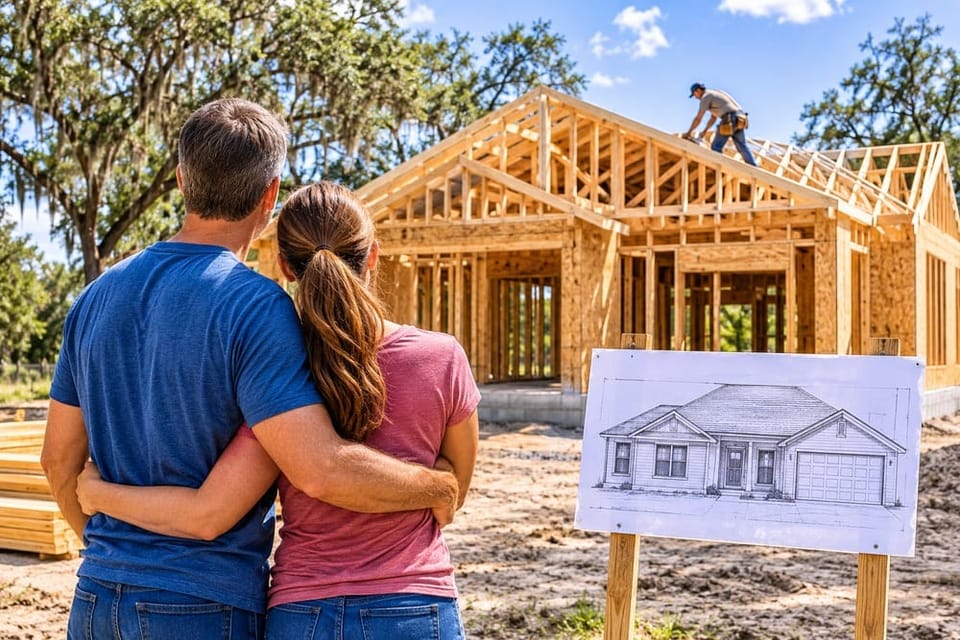
When you look at an empty lot in Ocala, Florida, what do you see? Some people see grass, trees, and a few stakes in the ground. Others see a front porch, a kitchen filled with family, and a place to call home.
That picture can become real, but building takes planning, permits, inspections, and a budget. Here is how a vacant lot becomes a finished home in Ocala and Marion County.
Step 1: Find the Right Piece of Land
Before choosing paint colors or kitchen cabinets, make sure the lot can support the home you want to build. Not every empty parcel is ready for construction.
Check zoning and land-use rules to learn what type of home is allowed. Review deed restrictions, easements, setbacks, road access, and any homeowners association rules. A survey shows property boundaries and can help determine where a house may fit.
Find out whether public water and sewer are available or whether you will need a well and septic system. Wetlands, drainage, and other environmental limits can affect where or whether you can build. A cheap lot can become expensive if it needs major preparation.
Acarta Realty can help buyers identify questions about a land purchase. Take a look at this available property in Ocala to see an example of the possibilities that vacant land can offer. For rural parcels, read our guide to buying rural property in Florida and checking zoning, wells, and septic systems.
Step 2: Decide What Kind of Home You Want
Once you find a promising lot, picture the home that fits your life and budget. How many bedrooms do you need? Would one story work best? Do you want a garage, patio, storage, or home office?
You might choose a builder's floor plan, hire an architect or designer, or consider another approved home type. The right option depends on your budget, the lot, local rules, and how custom you want the home to be.
A larger home usually means more than a higher building price. Utilities, taxes, insurance, and maintenance may also cost more. Choose a plan for the life you live, not just the furniture you might buy someday.
If you are comparing options, our article on site-built, modular, and manufactured homes in Central Florida explains some important differences.
Step 3: Set the Budget and Arrange Financing
Add up more than the builder's base price. Your project may include land, plans, permits, site work, construction, utility connections, driveway, landscaping, and closing costs. Get a written estimate showing what is included and what costs extra.
Keep a cushion for unexpected expenses. Soil conditions, material changes, weather, and extra site work can affect the final cost. Surprises are easier to manage when the budget has room for them.
If you need financing, ask a lender about construction loans. Some later convert to a regular mortgage. Discuss down payments, payments during construction, builder requirements, and how funds are released.
Step 4: Prepare the Lot and Get Permits
Before work begins, the plans must go through the required reviews. Depending on the lot and home, this may include site and building plans, engineering, septic or well approvals, driveway permits, and other reviews.
Required permits must be issued before the work they cover begins. Requirements can differ inside Ocala city limits and in unincorporated Marion County, so confirm which office handles the property.
Next, crews prepare the lot. They may clear vegetation, remove selected trees, grade the ground, plan drainage, and arrange access for equipment. Utility work may also be needed. The empty lot begins to look like a job site.
Step 5: Build the Foundation
With approvals and site preparation complete, foundation work can begin. The design depends on the plans, soil, engineering, and applicable requirements.
Crews prepare the building area, set forms and reinforcement, and complete the concrete work. Plumbing and other items that must go below or inside the slab are installed at the proper stage.
Inspections happen at required stages to confirm the work follows approved plans and building codes. Once the foundation is ready, you can begin to see where the home will stand.
Step 6: Watch the House Take Shape
Framing creates the walls, rooms, and roof structure. Windows, exterior doors, and roofing follow, giving the home its recognizable shape and helping protect it from the weather.
Licensed trades install wiring, plumbing, heating and cooling, and ventilation. These systems are inspected at required stages before walls are closed.
After approvals, insulation and drywall go in. Then come flooring, cabinets, countertops, tile, paint, lights, plumbing fixtures, and appliances. The house finally starts to feel like a home.
Step 7: Complete the Outside and Final Details
Outside, crews may complete the driveway, walkways, grading, drainage, sod, plants, fencing, and other approved improvements. Utility connections must be finished and working.
Drainage matters in Central Florida, where heavy rain can arrive quickly. Ask how water will move across the property and what landscaping or maintenance is included. Clarify what becomes your responsibility after closing.
Track upgrades and change orders. Small extras add up, so get each change, its price, and any schedule impact in writing.
Step 8: Final Inspections and the Walk-Through
Before move-in, the home must pass required final inspections. The building department checks applicable code requirements, and the builder completes remaining items needed for approval to occupy the home.
Walk through the home with the builder. Test doors, windows, faucets, toilets, lights, outlets, appliances, and heating and cooling. Note unfinished or damaged items in writing. Ask how systems work, where shutoffs are, and how to request warranty service.
Keep permits, inspection records, warranties, manuals, and final documents in a safe place.
From a Patch of Ground to a Place to Call Home
Building in Ocala takes several connected steps. The right lot, realistic budget, qualified builder, permits, and inspections help turn an idea into a finished home.
At Acarta Realty, we help buyers understand the land and real estate decisions that come before construction. If you are considering vacant land in Ocala or Central Florida, we can help you ask the right questions. Read our guide to buying a home with a well and septic system in Central Florida for more about private utilities.
The best part? One day you are standing on an empty lot trying to picture where the living room might go. Before long, you could be standing in that very room, wondering where you put the tape measure. That is when you know the dream has become home.